
Prized Staple Denim Tears Bold Wreath Statement
Frequently Asked Questions About Denim Tears
The questions below recur — from newcomers to the label and from owners trying to care for a piece properly. The answers remain factual, and prices are given as 2026 market estimates rather than fixed quotes, because this brand’s pricing moves with availability. Where a question touches the cotton wreath, the answer stays close to what the brand itself has stated about the motif. Sizing and care notes reflect how heavyweight cotton generally behaves and should be checked against your own garment’s tag. Nothing here removes the need to inspecting a piece in person and asking a seller direct questions. The order runs roughly from general to practical, but you can start anywhere.
What exactly is Denim Tears?
Founded in 2019 by Tremaine Emory, Denim Tears is an American clothing label. It sits between streetwear and cultural commentary, using garments as a vehicle for historical reference rather than decoration. The cotton wreath motif is its signature, most famously seen on Levi’s 501 jeans, hoodies and sweatpants. Rather than following a seasonal schedule, output is released in limited, irregular drops — hence the uneven availability. The catalogue remains deliberately narrow — denim, fleece, jersey and a few accessories. Because of that focus, individual pieces hold their identity years after release.
What is the cotton wreath motif about?
At its centre, the cotton wreath references the history of cotton, the transatlantic slave trade and African-American experience. Cotton sat at the centre of American slavery as a crop, and a wreath of cotton bolls on a garment turns that history into something worn rather than read about. Because a wreath carries associations of memorial and commemoration, the motif reads as solemn rather than ornamental. Applying it to Levi’s denim ties it to a garment woven into American self-image, sharpening the point considerably. This is the brand’s central idea, not a seasonal graphic, and virtually every category carries it. That reference is part of the garment for anyone who buys a piece, and understanding it first is worthwhile.
How much should I expect to pay for a Denim Tears hoodie in 2026?
Depending on weight, print and https://denimtearsofficialwebsite.com/hoodies/ colourway, estimated 2026 retail for a denim tears hoodie comes in within the $250-400 range. Resale asks for the same piece run at roughly $280 to $600, and older or scarcer colourways go higher. There is a seasonal pattern: prices firm from October to December, then ease through late spring by something like 15-25%. Retail estimates place denim tears jeans at $300-500, tees at $100-200, sweatpants at $250-350 and denim tears shorts at $180-280. Add another 15-25% for fees, shipping and duty on a resale purchase — the headline number is hardly ever what you actually pay. Read every figure as a moving market estimate rather than a quotation.
How does the sizing run, and do I need to size up?
Because most fleece is cut boxy, with a wide chest and a short body, it sits larger than a standard sweatshirt in the same size. If you want the intended silhouette, take your normal size; if you want it genuinely oversized, one size up will usually do it. Jeans built on the Levi’s 501 pattern behave exactly as that cut always does — true straight leg, firm waist that gives slightly as rigid denim relaxes. Compared with a standard fitted tee, the tees run fuller, and they shrink somewhat in the body on a warm wash. Shorts vary more between releases than any other category, so measurements matter more than the letter on the tag. When you are unsure, ask for a flat-lay chest and length from the seller rather than trusting size alone.
| Item | Fit character | What to order | 2026 estimated retail |
|---|---|---|---|
| Pullover hoodie | Wide in the chest, short in the body, boxy | Your normal size; one up if you want it oversized | $250-400 |
| Jeans | True straight, firm waist | Order your usual waist | $300-500 |
| Tee | Full through body and sleeve | True to size, with slight shrinkage expected | $100-200 |
| Sweatpants | Easy leg with an elasticated waist | Your normal size | $250-350 |
| Denim and fleece shorts | Changes from release to release | Read the measurements, ignore the tag | $180-280 |
Who has the brand collaborated with?
The Levi’s partnership is the best known and most tied to the label’s identity, centred on the wreath-printed 501. Converse has produced footwear with the brand, translating the motif onto canvas silhouettes. Stüssy has contributed collaborative apparel, pairing two labels with distinct places in streetwear history. Reaching furthest into luxury, the Dior work connects the wreath to a European house serving a different customer base. On a separate track, Tremaine Emory took the creative director role at Supreme from 2022 to 2023. Collaborative pieces occupy the top of the resale market, drawing collectors from both brands rather than just one.
What makes retail purchases so difficult?
Releases run small, come with short lead time on the announcement, and sell through a narrow set of channels. Popular sizes sell out within minutes on the official webstore, and automated buying tools compete with ordinary shoppers. Authorised stockists get limited allocations and often buy part of a collection, so a piece may exist in two sizes and one colour. The secondary market therefore acts as the practical default, above all for anything more than a season old. Scarcity here is structural, not temporary, and it has been consistent since roughly 2020. Setting up an account with saved details in advance is the single most effective thing a retail buyer can do.
How can I tell a fake from the real thing?
The print, not the label, is where to start — counterfeits most often fail on the wreath itself. Genuine prints have consistent density, clean edges and correctly proportioned cotton bolls, while copies tend to look either too thin or slightly blurred at the boundaries. Check the neck label and internal wash tag for correct fonts, straight stitching and a fabric composition consistent with the era of the release. Weight is a strong signal on fleece — authentic pieces feel noticeably heavier than a standard hoodie of the same size. Treat a price more than about 40% under the going market rate as a warning sign, not a bargain. Always ask for live photographs of the actual garment, including the tags, before paying anyone.
What is the right way to wash and store my pieces?
Cold water, inside out, gentle cycle, small load — that keeps the print from being abraded against zips or hardware. The tumble dryer should be skipped altogether for printed fleece and jersey — heat causes cracking and loss of density. Hang or lay flat to dry, reshaping the shoulders while damp to preserve the boxy cut. Far longer between washes than most people expect is ideal for rigid denim, and it protects both colour and print. Folded storage in a dry space is preferable to a thin hanger, which stretches the shoulder line over months. Nothing influences resale value more than careful laundering.
Are a denim hoodie and a fleece hoodie the same?
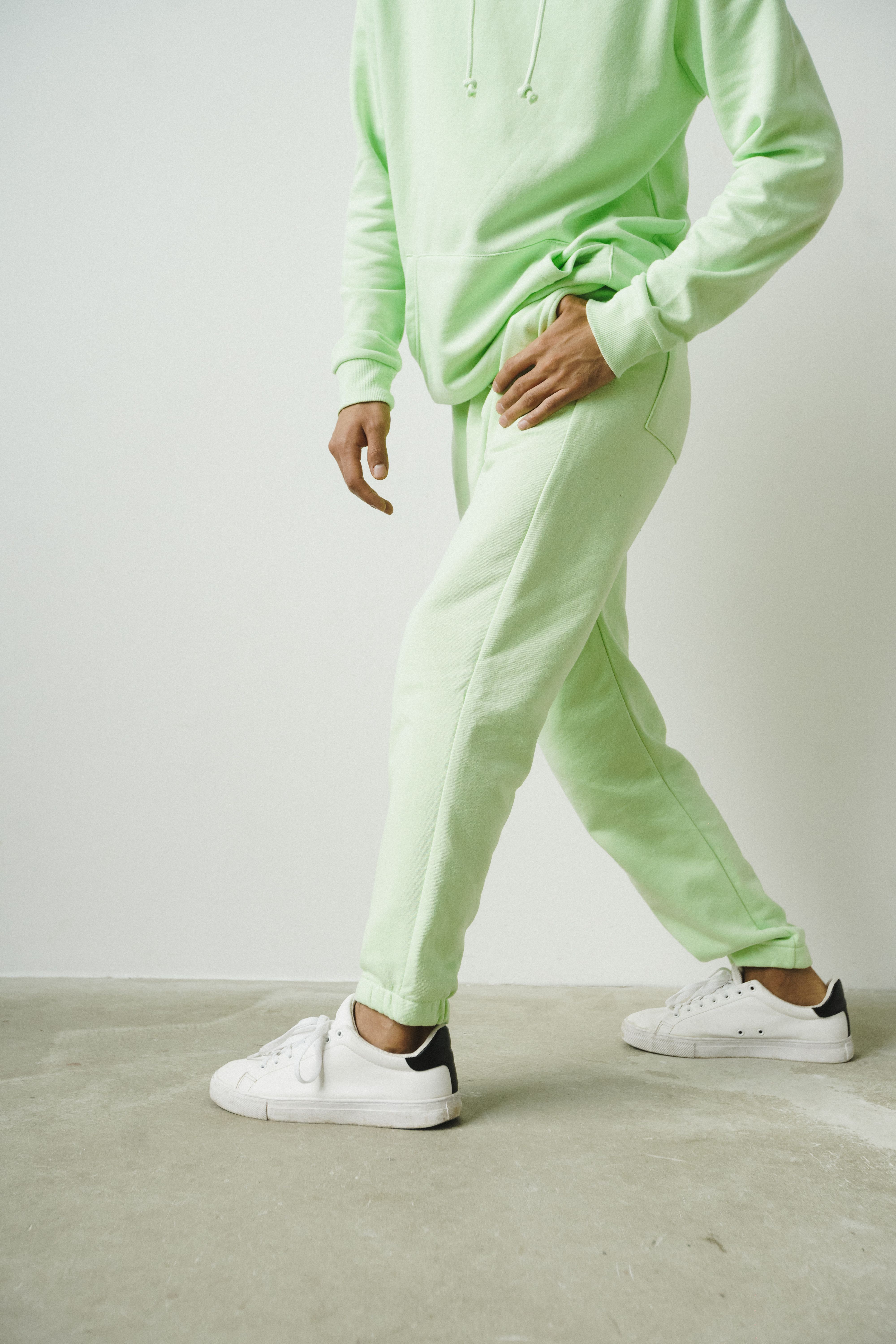
No; the shared name understates a difference that matters a good deal. A denim hoodie is constructed from woven denim, so it holds its shape, blocks wind and functions as a light outer layer. Knit rather than woven, a fleece hoodie is softer and warmer against the skin, and it is intended to layer under something else in cold weather. For spring and early autumn — roughly the 10 to 18 degree Celsius range — the denim version is the one to reach for. Denim wears in visibly, with fades at the elbows and cuffs that plenty of owners regard as the point. If you already own one, the other is truly a different purchase and not a duplicate.
Do pieces hold their value on the secondary market?
Some do, and the behaviour is fairly consistent by category rather than by individual item. Collaboration denim has generally held the strongest, with estimated 2026 asks often between about 1.3x and 2.5x original retail. Around 1.0x to 1.6x is where fleece lands, with tees and shorts frequently trading at or just below retail. Those numbers move with condition, size and the month of listing — sometimes by a quarter of the total. No guarantee attaches to any of this, and since resale prices can fall as easily as rise, it should not be mistaken for investment reasoning. The safest approach is to buy pieces you want to wear at prices you would accept even if the market cooled.
Which is right: Denim Tears, denimtears, or another form?
The brand name runs to two words, Denim Tears, and that is how it appears on the label’s own materials. Because people type quickly and drop the space, compressed forms like denimtears appear in search boxes and social handles. Variants such as denim tear shirt are common misspellings rather than separate products, and they generally lead to exactly the same tees and shirts. It matters practically: counterfeit listings often use misspelled variants to dodge trademark enforcement. Searching secondhand, use both the correct spelling and the compressed form — each search alone misses listings the other finds. When it comes to buying, though, verify the garment rather than the spelling in the title — a correctly spelled listing proves nothing at all.